Long before anyone walks through the door, a business has already made an introduction.
Sometimes it happens from across a six-lane road, where a name appears for only a few seconds between traffic lights. Elsewhere, the first encounter is a monument sign emerging from landscaping at the entrance to a medical complex, or a row of illuminated channel letters coming into view as daylight fades over a shopping plaza. The customer may barely think about any of it, yet the impression has already begun.
That quiet moment is what makes commercial signage in Fort Myers, Cape Coral, and Naples so important. Southwest Florida is filled with properties where several businesses share the same stretch of road, the same shopping center, or even the same architectural style. Being present is not enough. A business has to be recognized.
Good signage does that without asking for too much attention. It guides the eye, establishes a name, and makes the next step obvious. The best examples often feel so natural to the property that it is difficult to imagine the building without them.
A Business Has to Be Found Before It Can Be Remembered
Designing a sign from behind a desk can be deceptive. On a monitor, every letter is perfectly legible, and every detail has room to breathe. The reality outside is very different: cars are moving, trees interrupt sightlines, parked vehicles block lower portions of a storefront, and neighboring businesses are competing within the same field of vision.
That is why visibility should begin with the road rather than the artwork. A storefront positioned close to traffic may need little more than strong lettering and good contrast. Move the same business behind a large parking lot and the equation changes. Height, viewing distance, and the location of the entrance suddenly become much more important.
This is where monument signs and pylon signs continue to play such a central role in Southwest Florida commercial properties. They may belong to the same general family of roadside signage, but they create very different relationships with the street.
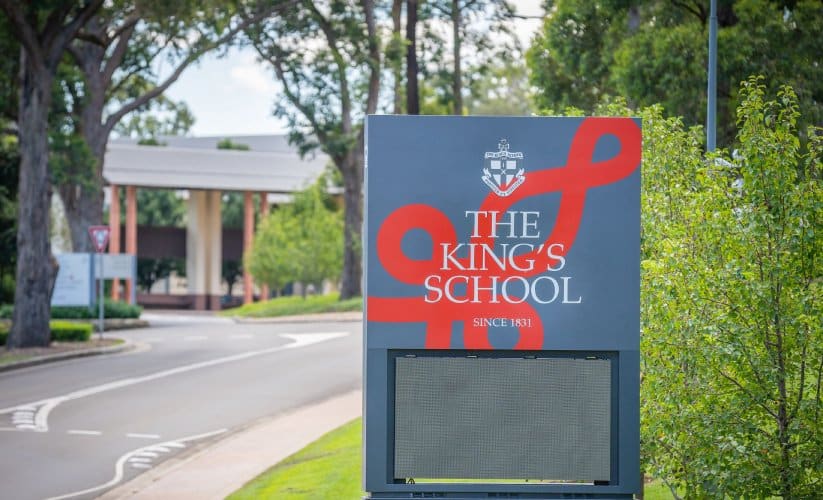
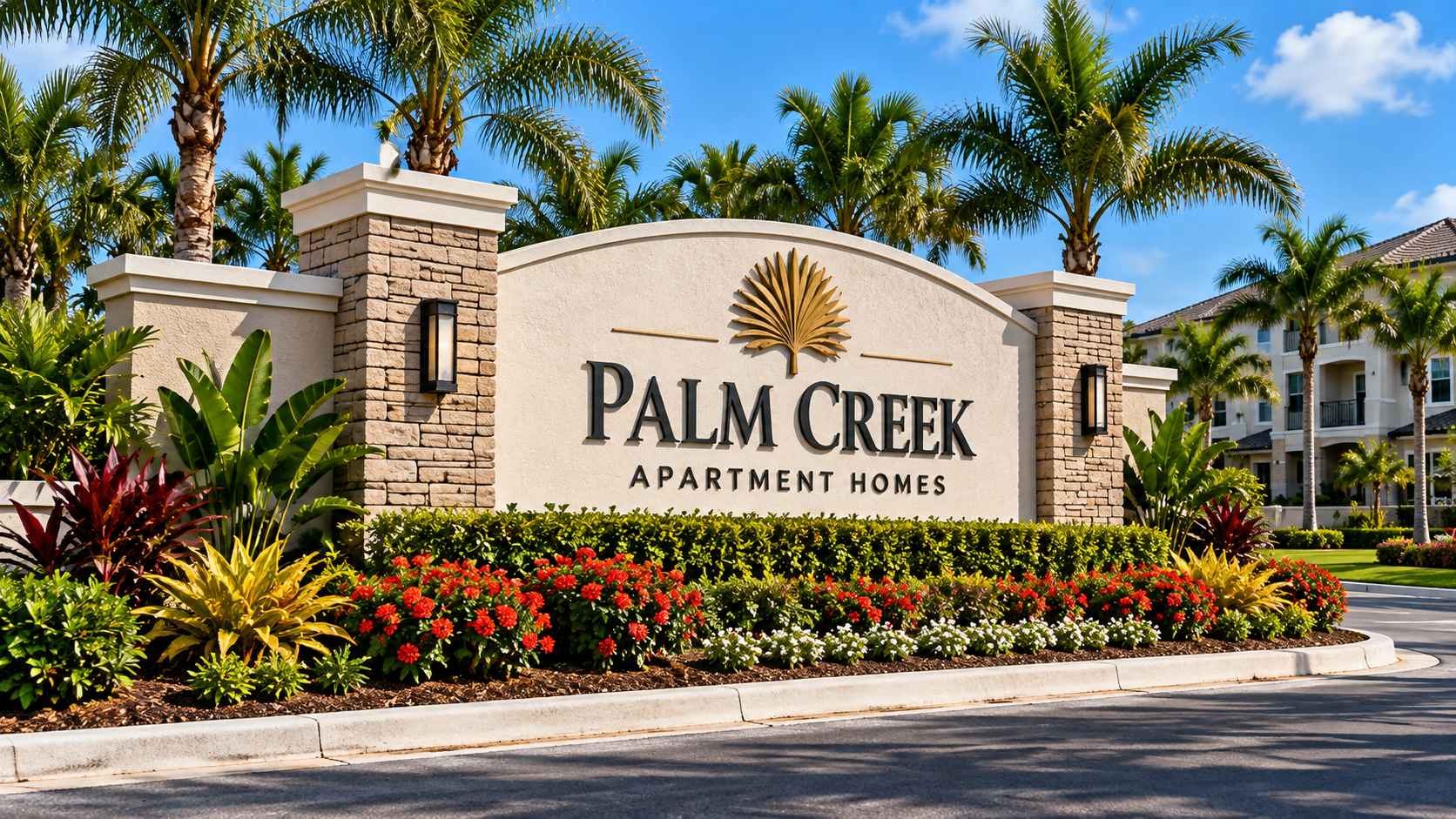
A monument sign feels anchored to the property. Surrounded by landscaping or integrated with stone, stucco, and architectural finishes, it can turn an entrance into something more memorable. Medical offices, churches, apartment communities, professional buildings, and shopping plazas often benefit from that sense of permanence.
A pylon reaches farther. When the storefronts are hidden by distance or surrounding development, height allows the property to introduce itself before the buildings become visible. For businesses along broad roads in Fort Myers and Cape Coral, those extra seconds of recognition can be far more valuable than additional decoration.
The familiar search for pylon sign vs monument sign therefore has no universal answer. A sign type should follow the property, not the other way around.
So, which one does your business need?
The answer begins at the road.
The Storefront Has a Different Story to Tell
After the turn has been made and the customer enters the property, the scale changes. Now the shopping plaza sign is behind them, and individual storefronts begin competing for recognition. Similar rooflines, repeated columns, and matching façades can make neighboring businesses blend, especially in centers designed under a common architectural standard.
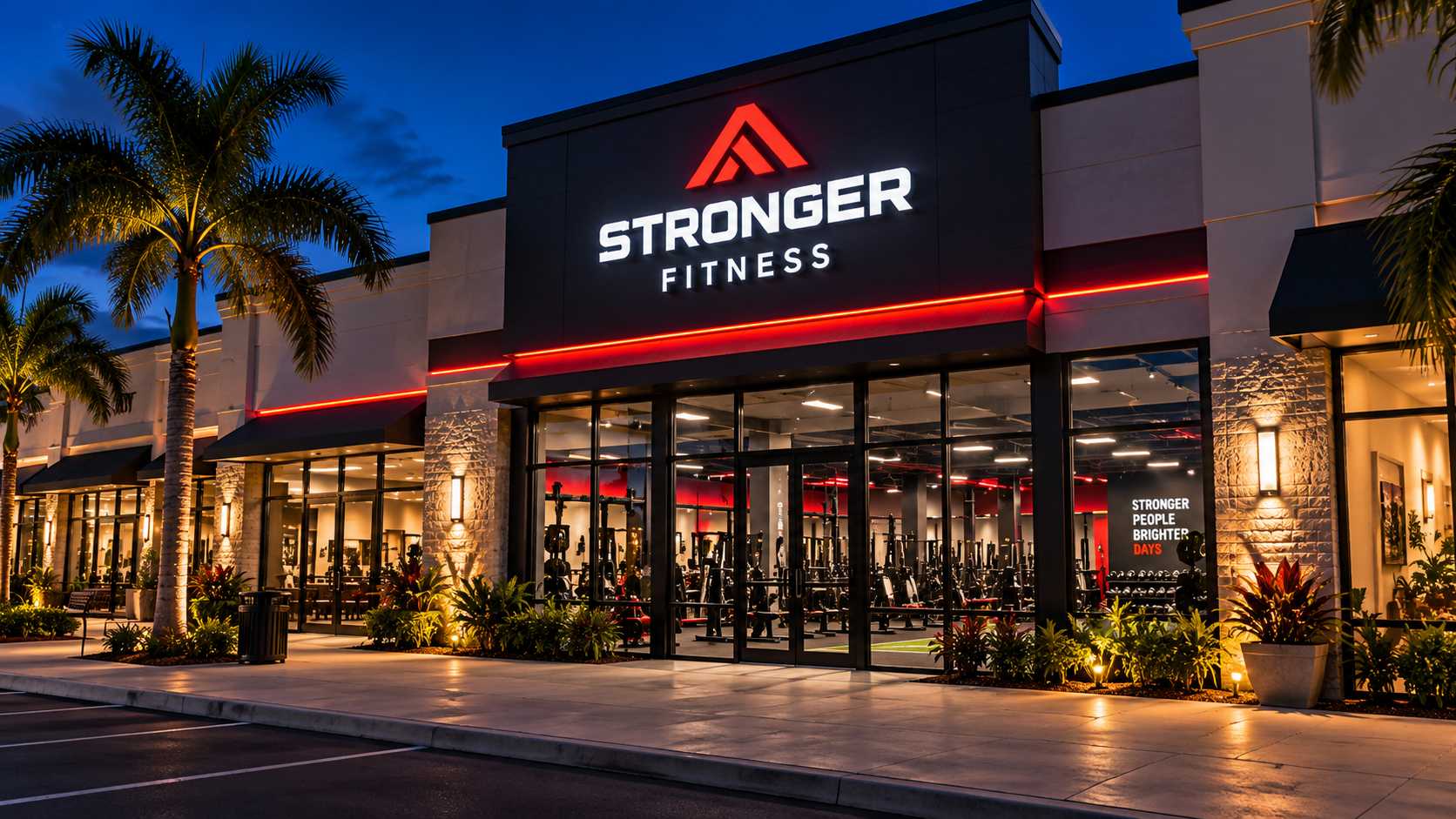
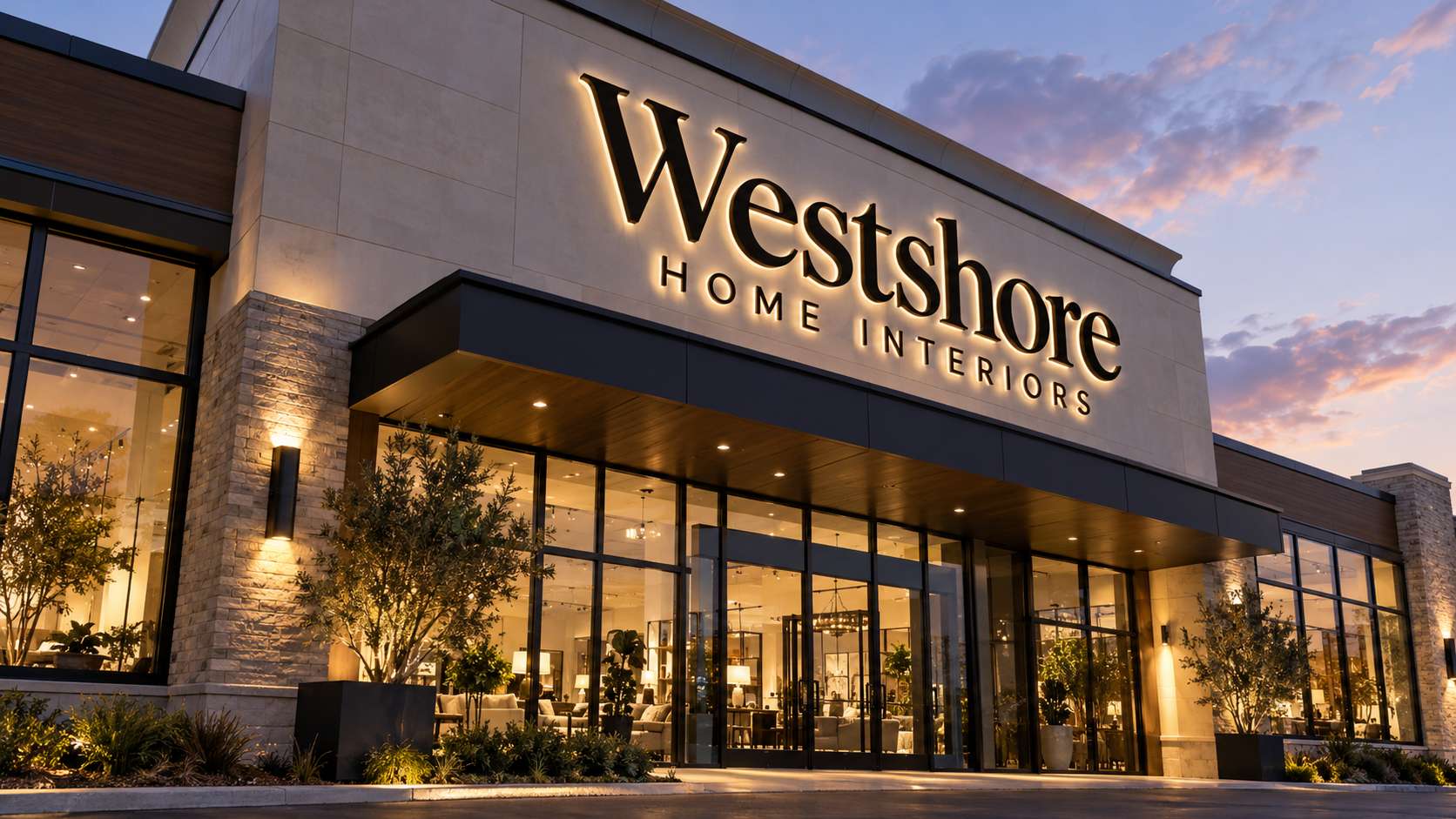
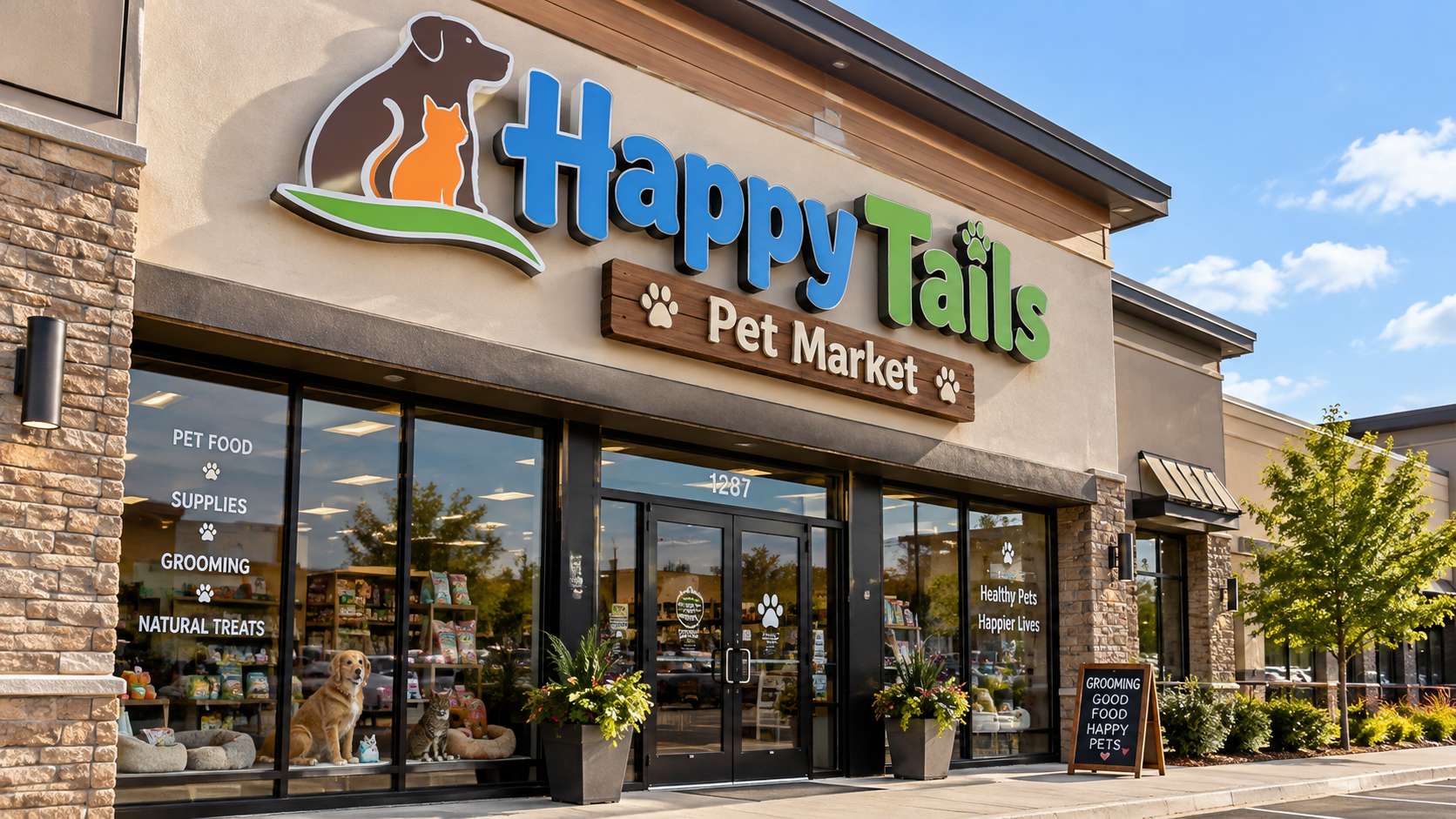
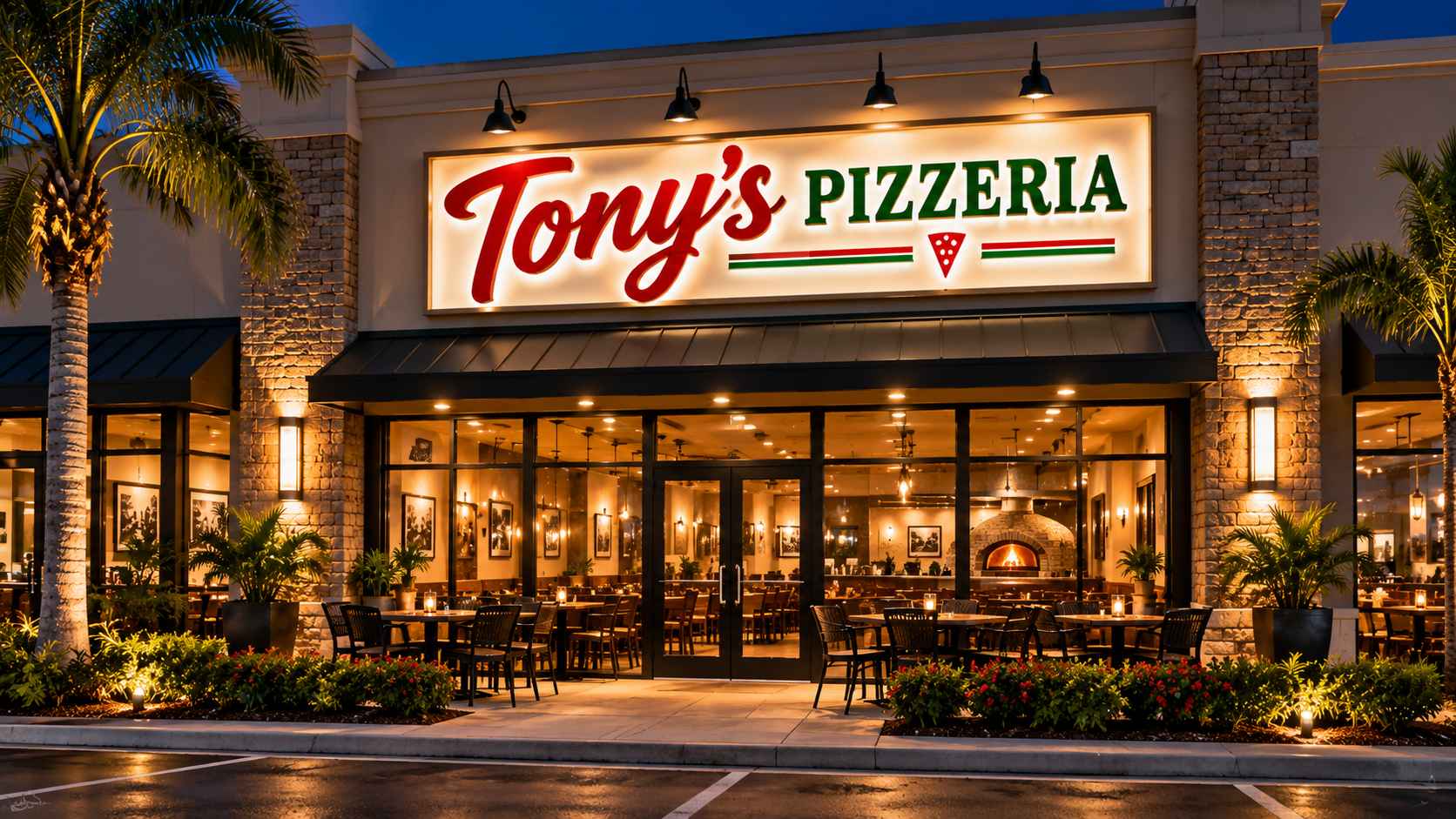
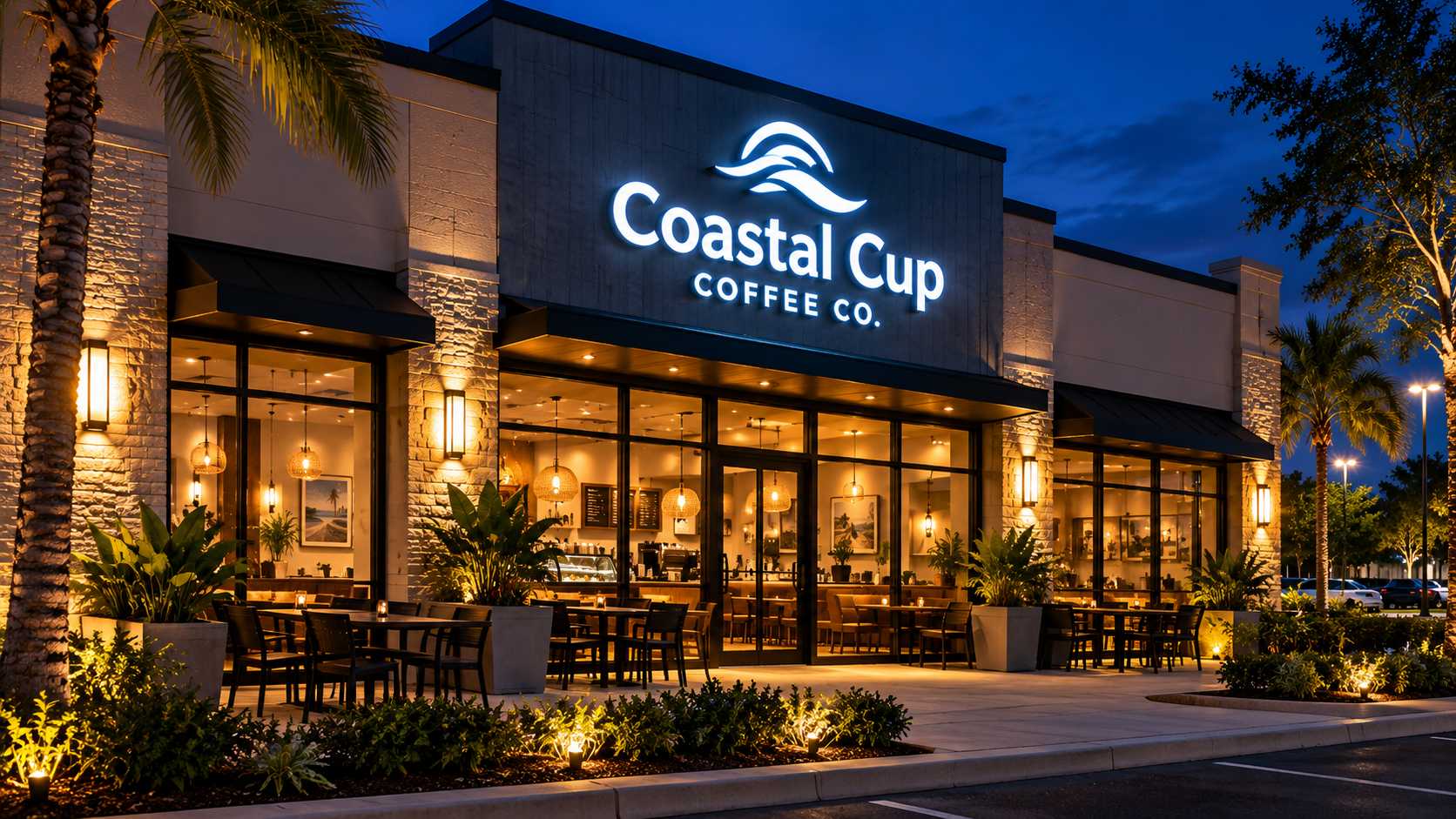
A successful storefront sign has to create distinction without looking disconnected from its surroundings. Channel letters have remained popular partly because they manage that balance so well. Each letter has its own physical presence, allowing a brand to preserve more of its original typography while creating depth on the façade. During daylight, the form itself creates definition; after sunset, illumination takes over.
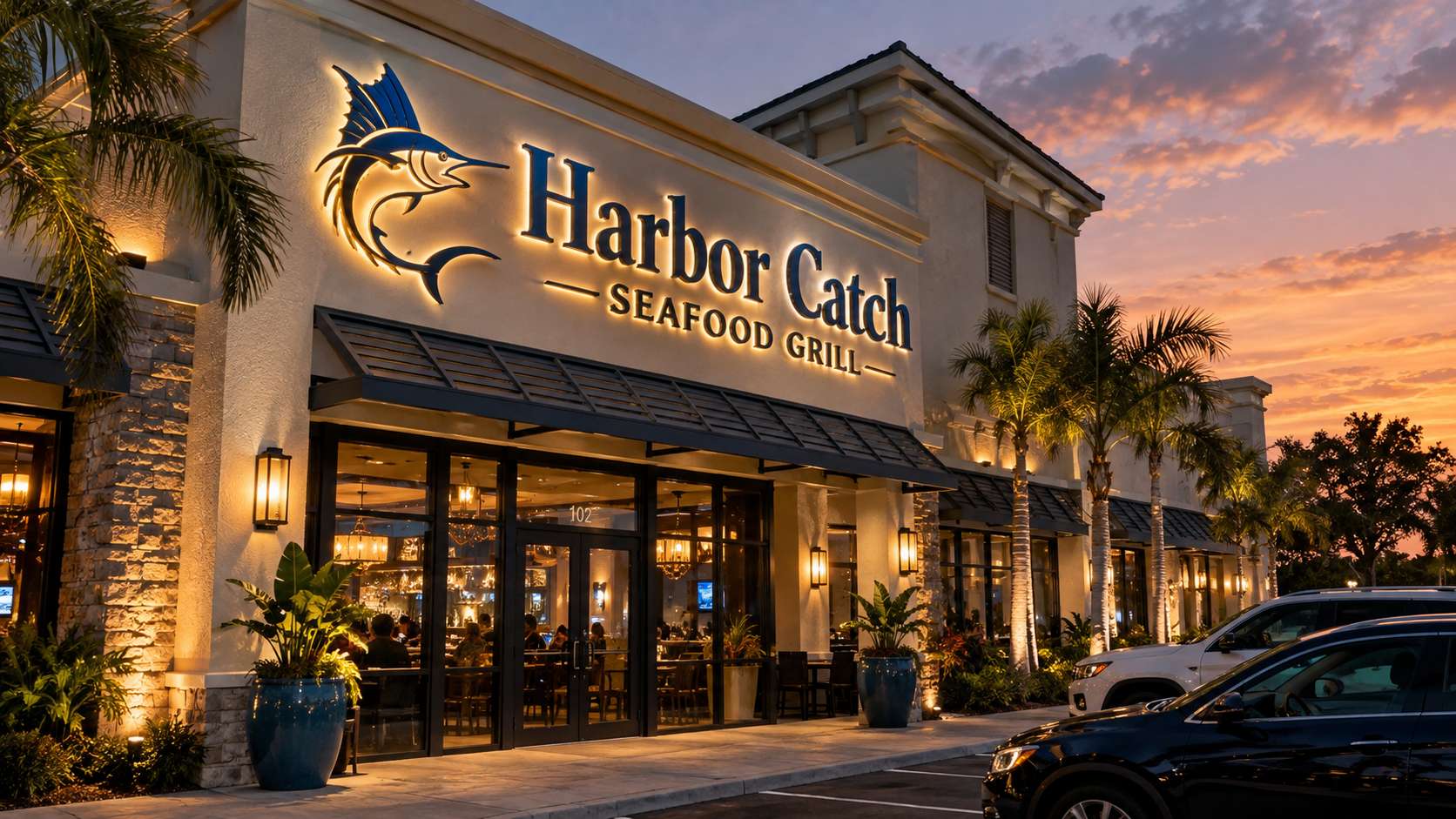
For many restaurants, retailers, and professional offices, channel letter signs become more important in the evening than they are at noon. Once the building recedes into darkness, the sign becomes the architecture people notice first.
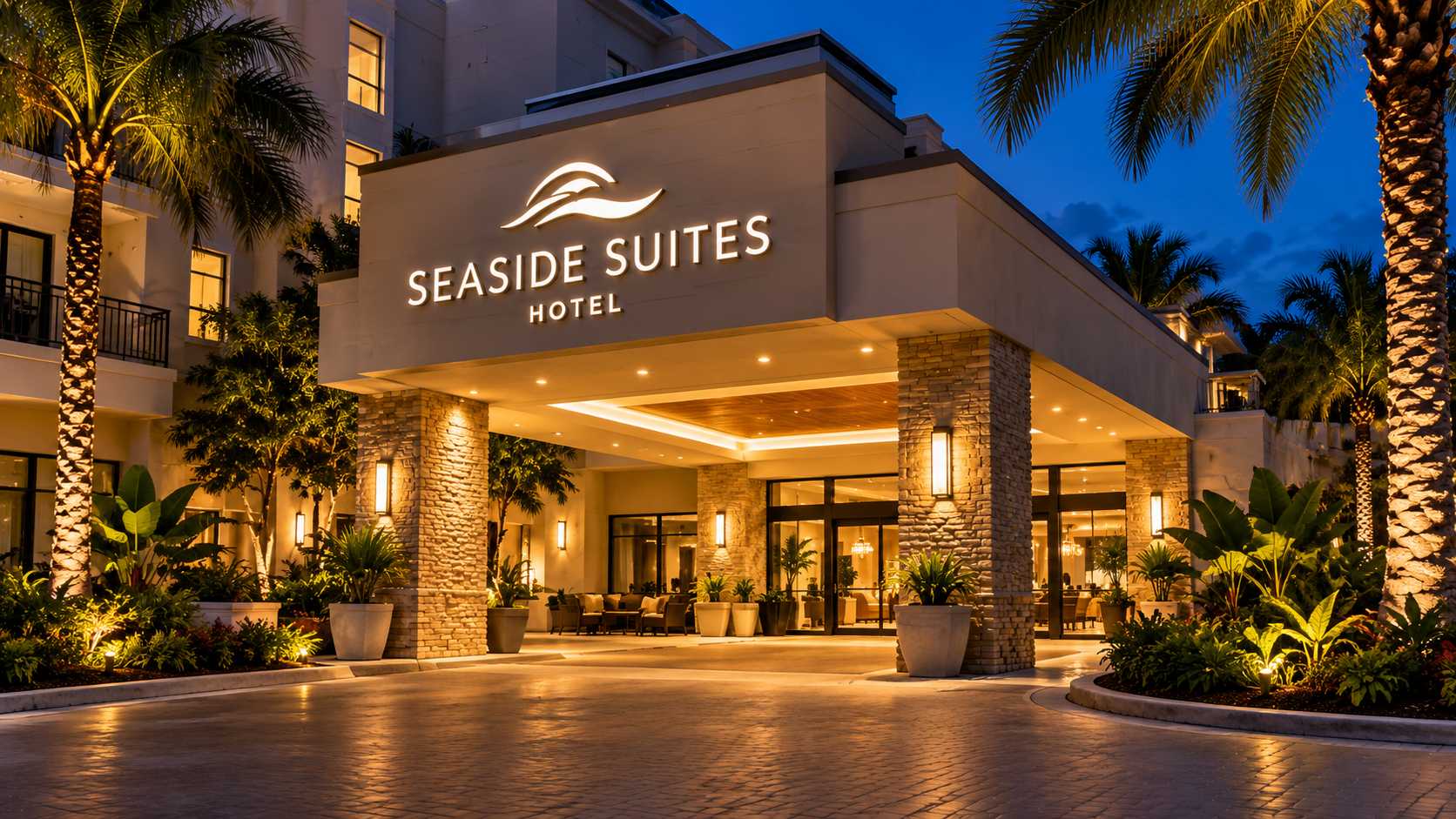
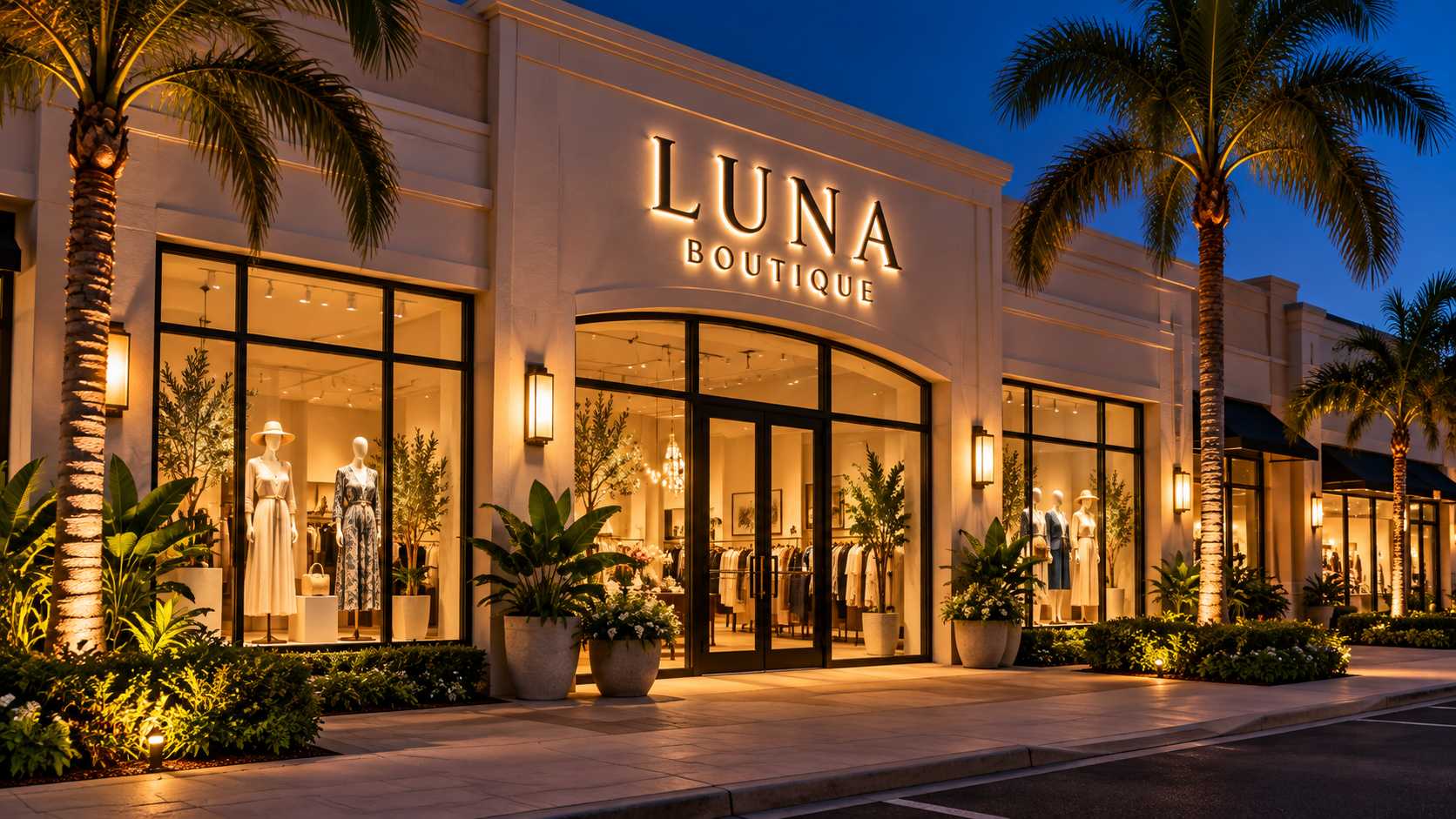
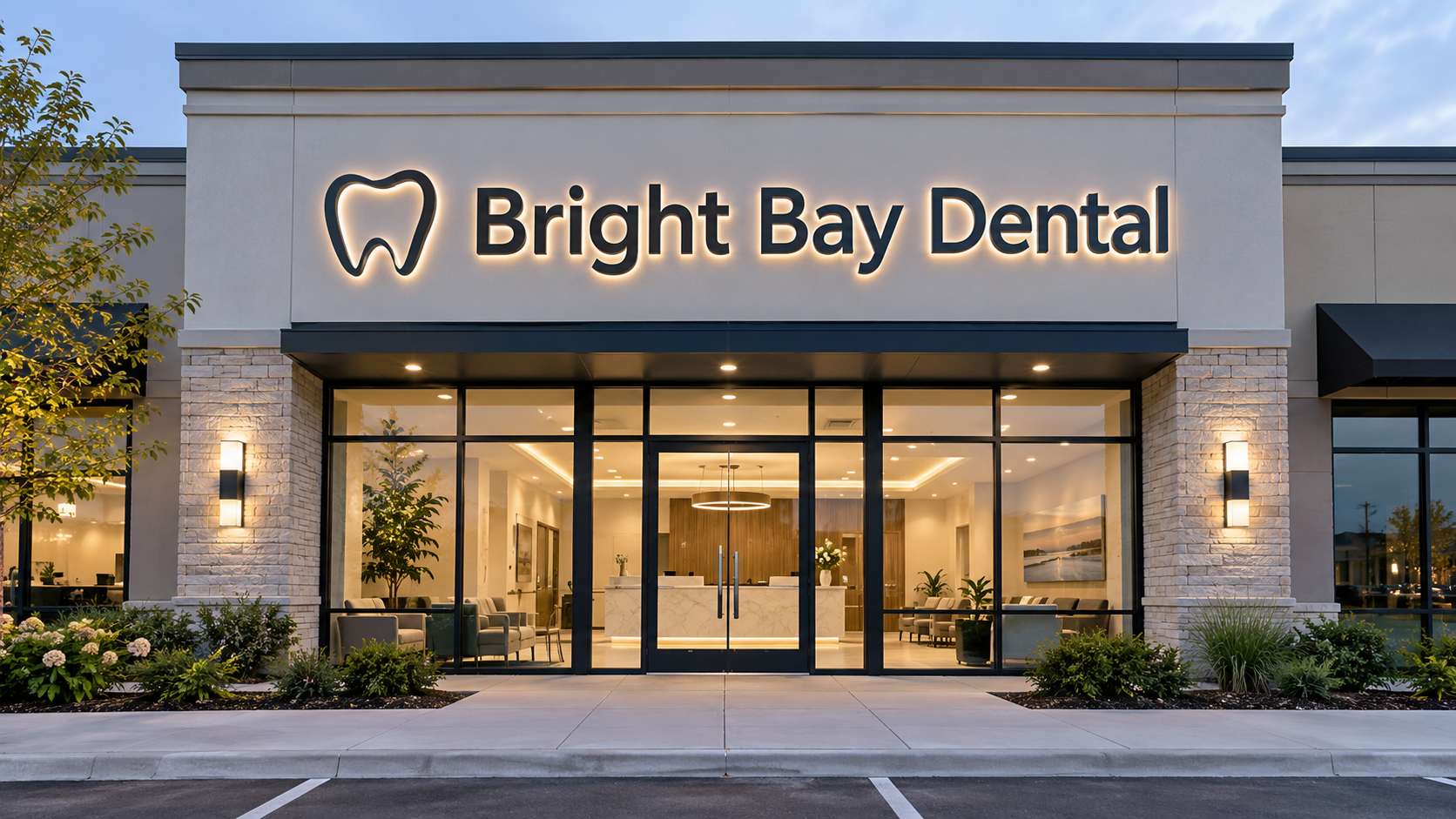
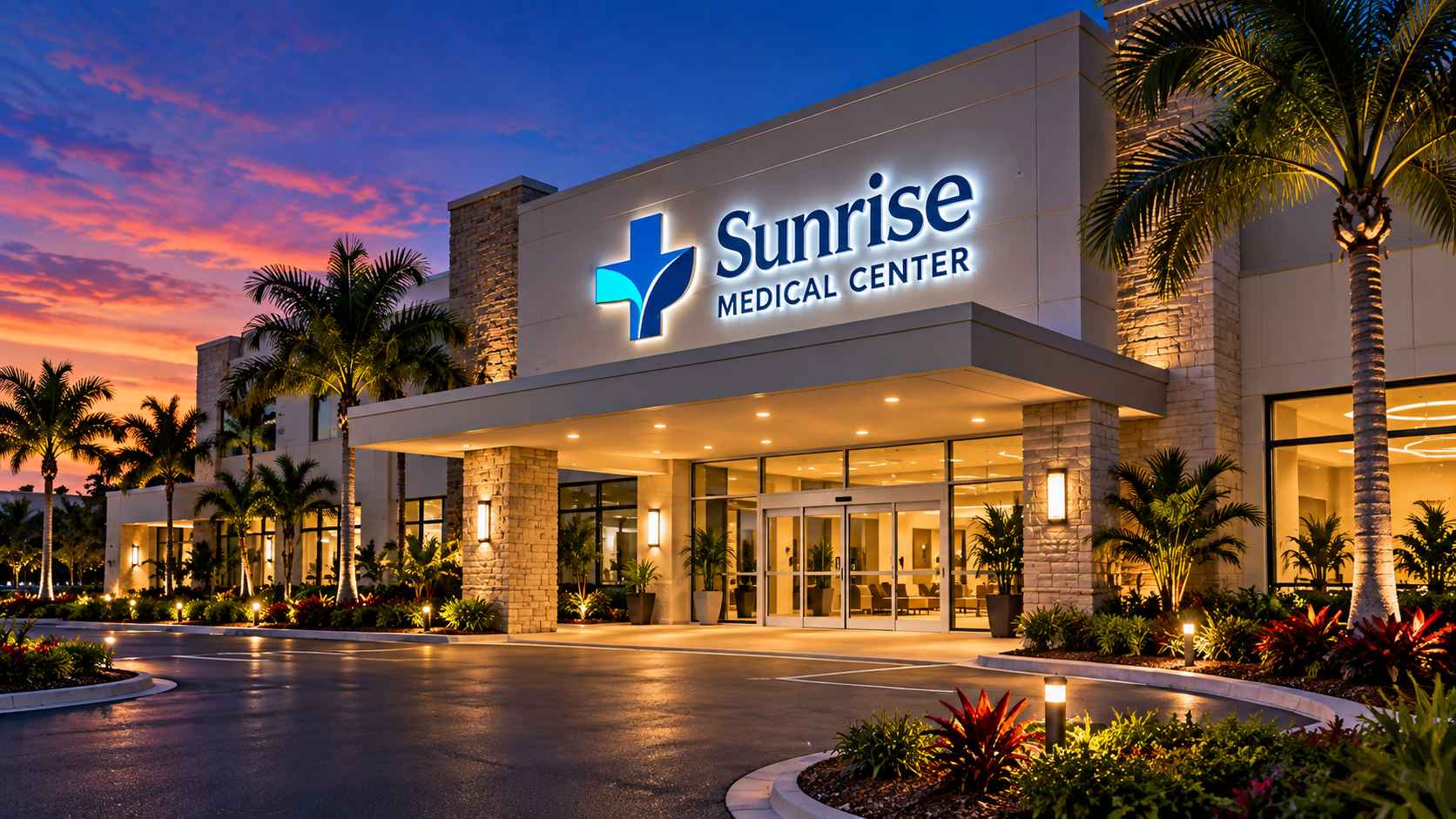
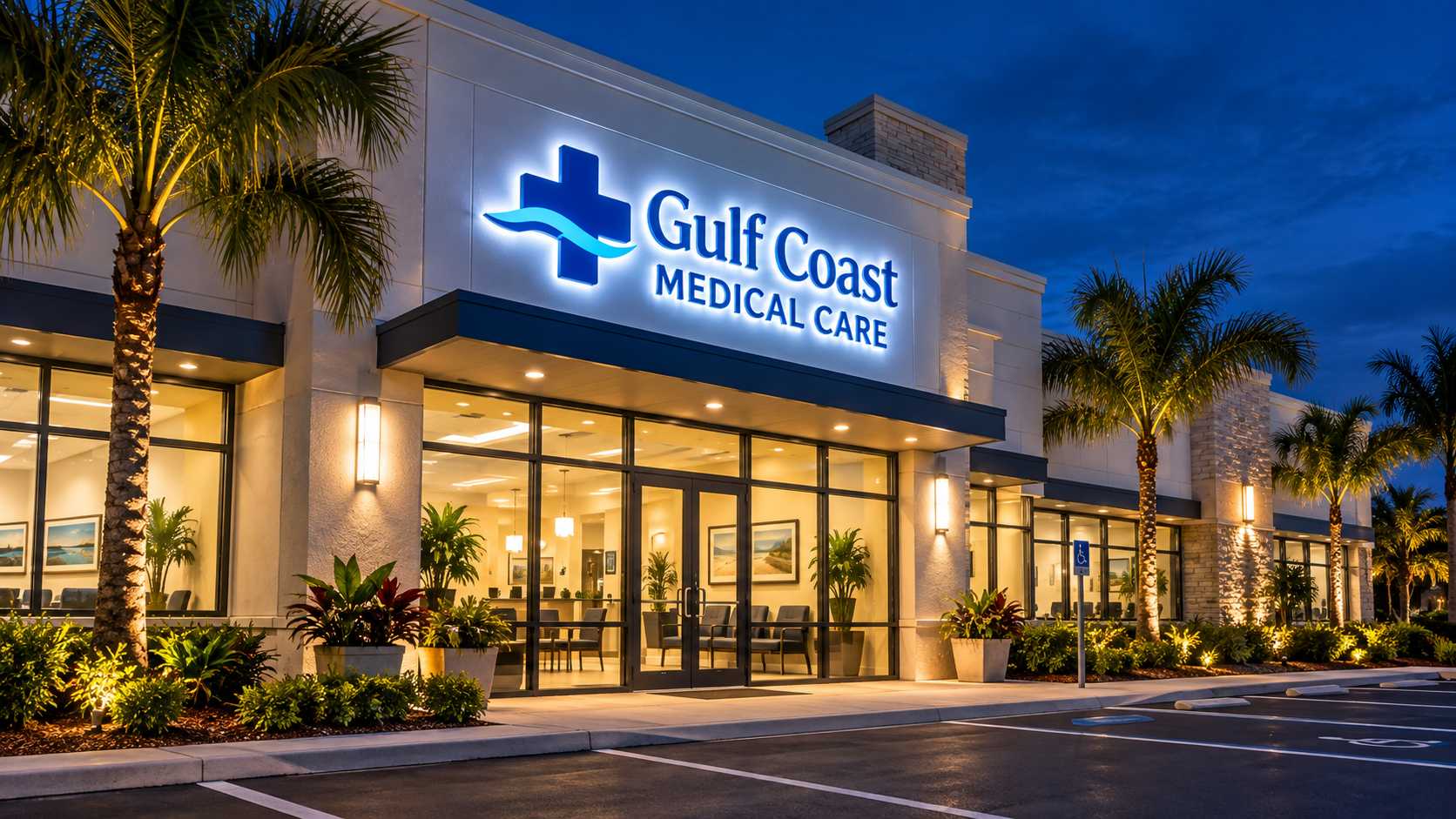
Reverse channel letters approach the same problem with a softer hand. Their illumination reflects against the wall behind the letters, leaving a halo around the name instead of placing all the brightness at the front. The effect is particularly attractive on healthcare offices, restaurants, hospitality properties, and businesses trying to create a more refined nighttime appearance.
Neither option is inherently more premium. What matters is the character of the business, the façade beneath it, and the way the property changes once the sun goes down.


Loyalty
Becomes Reality
Proudly trusted by thousands for delivering signage solutions that make businesses shine.
Shopping Centers Reward Clarity
There is a temptation to make a business sign explain everything. A company name becomes a name plus a slogan, then a telephone number, perhaps a website, and finally a list of services squeezed into whatever space remains. Each addition seems reasonable when considered alone. Together, they often weaken the very thing the sign was supposed to accomplish.
People moving through a shopping center do not read signage like a brochure. They scan.
In busy retail environments around Fort Myers, Cape Coral, and Naples, clarity can be more distinctive than complexity. Strong typography, enough space, and a recognizable brand mark often travel farther than a crowded composition filled with useful information nobody has enough time to absorb.
The same lesson applies to digital signs. Technology offers nearly unlimited opportunities to change content, yet the strongest message on a digital display is usually the one given enough time and space to be understood.
A restaurant can feature an evening special rather than its entire menu. A church can announce an upcoming service or community event. An apartment community can communicate leasing information without asking drivers to process several messages before the light changes.
Flexibility is the advantage of digital signage. Restraint is what makes that flexibility useful.
One Shopping Plaza, Many Identities
Commercial centers have an unusual design problem: every tenant wants to look different, but the property cannot afford to look chaotic.
When the balance is lost, signage begins competing with signage. Tenant panels use incompatible colors, storefronts fight for scale, and illumination becomes progressively brighter because everyone is trying to overcome the business next door. A better shopping center has a visual hierarchy.
The monument or pylon sign introduces the property from the road. Tenant panels help drivers identify who is inside. Storefront signage takes over at closer range, while directional and parking signs guide movement without demanding attention for themselves. Different brands can remain distinct within that system without turning the property into a wall of unrelated messages.
This matters particularly in commercial developments where appearance is part of the value of the property itself. Naples businesses may operate within more restrained architectural environments, while a busy retail corridor in Fort Myers or Cape Coral can demand a stronger roadside presence. Even within the same city, one shopping plaza may require an entirely different approach from another a few miles away. Local signage succeeds when it notices those differences.
Florida Leaves Its Mark on Everything Outdoors
The first photographs of a new sign tell only the beginning of the story. Southwest Florida sunlight is intense enough to challenge finishes year after year. Humidity and rain test electrical components and fabrication details, while coastal properties have another invisible opponent in salt carried through the air.
A commercial sign in Naples or Fort Myers therefore has to be judged on more than its appearance when new. Materials, fabrication, finishes, and access for future repairs influence whether that same sign will continue representing the business well several summers later.
Maintenance is particularly easy to underestimate. Illuminated channel letters mounted high on a façade may eventually need service. Monument signs contain lighting and electrical components that should remain accessible. Digital displays have their own long-term requirements. Designing with those realities in mind can make the difference between routine maintenance and an expensive repair.
Florida weather does not care how attractive the original rendering was. Quality reveals itself slowly.
Permitting Is Part of the Design, Even When Nobody Sees It
Behind an attractive storefront, there is usually a much less glamorous collection of drawings, measurements, approvals, and structural considerations.
Sign regulations can affect dimensions, placement, illumination, and electrical work. Shopping centers may also impose tenant criteria that determine what kind of commercial signage can appear on the façade or monument panels. The details vary by property and jurisdiction, which makes treating permitting as an afterthought risky.
A business preparing to open does not want to discover late in the process that the approved concept has to be redesigned. Bringing sign permitting into the project earlier allows creative decisions to develop within the actual possibilities of the location. Manufacturing and installation can then follow a clearer path, reducing the kind of revisions that consume time without improving the sign.
Customers may never know how smoothly that process went. They simply arrive one morning and see the finished name on the building. That invisibility is a sign of good planning.
Old Signs Leave Traces
Commercial properties are never truly finished. Tenants change, companies rebrand, restaurants move, and shopping centers evolve with the neighborhoods around them. What gets removed can matter almost as much as what replaces it.
Old channel letters may leave a pattern of mounting holes across a façade. Paint hidden behind a sign for years can reveal a different shade from the surrounding wall. Electrical connections have to be addressed, while aging monument and pylon structures need to be evaluated before new faces or tenant panels are added.
For that reason, storefront sign removal is not simply demolition. Done properly, it prepares the building for its next identity.
Sometimes the smartest solution is to preserve part of what already exists. A structurally sound monument sign can often receive new finishes, updated illumination, or redesigned panels. Other structures have been modified so many times that another retrofit only carries old problems forward. A good sign company should know when to restore and when to begin again.
The Sign Should Belong to the Place
Southwest Florida may be discussed as one market, but its commercial environments are remarkably varied. Fort Myers mixes older business corridors with newer development. Cape Coral’s scale and road network create different visibility challenges. Naples often asks signage to coexist with a more controlled architectural character, while Estero and Bonita Springs continue to develop around shopping, residential, and mixed-use properties. Lehigh Acres, Sanibel, Marco Island, and neighboring communities introduce still more variations in traffic, architecture, and setting.
That diversity is precisely why generic sign solutions tend to feel generic once installed. A good sign responds to its surroundings before trying to dominate them. It takes into account the direction customers arrive from, the distance at which they first see the property, the architecture behind the lettering, and what happens to the entire scene after sunset.
When those details are handled well, signage stops feeling like an object attached at the end of a construction project. It becomes part of the place itself. Perhaps that is the simplest measure of successful business signage in Southwest Florida: people can find the business easily, recognize it again later, and never have to wonder why the sign works.
Businesses truly rely on Loyalty Signs for complete commercial signage solutions. From design and permitting to fabrication, installation, repairs, and removals, the team handles every stage of the process. Their capabilities include everything from channel letters to digital displays, and all their products are built for a wide range of commercial properties.